
Introduction
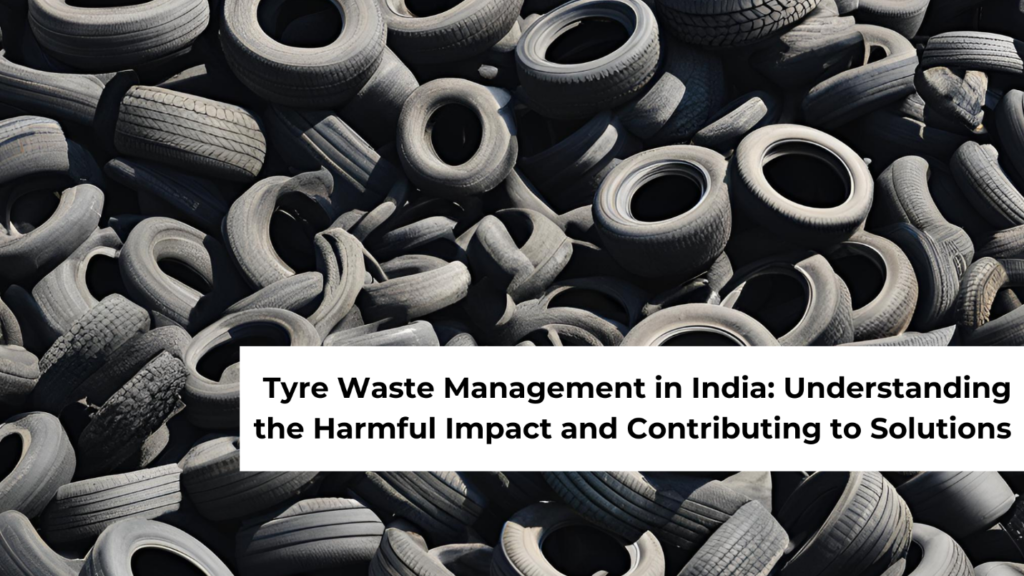
The handling of tyre debris is one of the many environmental issues that India, one of the nations with the highest rate of growth in the world, must deal with. The amount of trash tyres produced by the growing number of cars on the road is concerning. If tyre trash is not properly managed, there are serious threats to human health and the environment. This article explores the damaging properties of tyre waste, the condition of tyre waste management in India today, and doable solutions to help address this expanding issue.
The Harmful Nature Tyre Waste
Because of their intricate composition, resilience, and potential to harm the environment, tyres represent a special kind of waste. Here are some negative effects of tyre waste:
- Non-Biodegradability: Tyres are extremely robust and resistant to deterioration since they are composed of a mixture of synthetic and natural rubbers, carbon black, and different chemical additives. In a landfill, tyres can take hundreds of years to decompose and release toxic compounds into the surrounding soil and water.
- Fire Hazards: Tyres are extremely flammable and challenging to put out once they ignite. Tyre fires have a long burning season and can emit harmful chemicals into the atmosphere, including sulfur dioxide, carbon monoxide, and volatile organic compounds (VOCs). In addition to contributing to air pollution, these emissions can seriously impair the respiratory systems of those living close by.
- Mosquito Breeding Grounds: When abandoned tyres gather water, they turn into ideal mosquito breeding grounds, which raises the risk of dengue and malaria. Given how common these illnesses are in India, this is a serious public health issue.
- Toxic Leachates: When tyres deteriorate, they leak dangerous materials into the environment, such as polycyclic aromatic hydrocarbons (PAHs) and heavy metals (lead, cadmium, etc.). These pollutants pose a risk to human health and ecosystems by contaminating soil and groundwater.
- Space Consumption: Because of their size, tyres take up a lot of space in landfills. Their structure and strength prevent compaction, which reduces landfill efficiency and requires more room to store this waste.
India’s Present Situation Regarding Tyre Waste Management
India produces about 275,000 tonnes (approximately) of waste tyres every year, and as more people buy cars, this amount is predicted to grow. There are currently both official and informal methods used in India to control tyre waste:
- Retreading: To prolong the life of a tyre, retreading entails swapping out the worn tread for a new one. Due of its affordability, this procedure is frequently used in India, particularly for commercial cars. Retreading tyres simply postpones the destruction of the tyres at the end of its useful life, and not all tyres are suited for this procedure.
- Recycling: In India, some used tyres are turned into rubberized asphalt, playground surfaces, and rubber matting. However, because to difficulties with collection, segregation, and processing, the recycling rate is still low. Furthermore, improper management of recycled materials could still provide environmental problems.
- Pyrolysis: This is the process of converting tyres into oil, gas, and char by heating them to high temperatures without the presence of oxygen. Although this technique can recover significant resources, its widespread use in India is hindered by high upfront costs, legal obstacles, and worries about emissions from plants with lax regulations.
- Informal Sector: In India, the informal sector handles a large amount of tyre waste. Tyre garbage is frequently burned for fuel or illegally disposed of. The risks to human health and the environment are increased by this uncontrolled disposal.
- Government rules: The Hazardous and Other Wastes (Management and Transboundary Movement) Rules, 2016 are one of the rules the Indian government has put in place to deal with tyre trash. These regulations require the correct disposal of worn tyres and classify them as hazardous waste. Nonetheless, informal operators frequently get around the laws, making enforcement difficult.
What We Can Do to Help Manage Tyre Waste
In order to effectively combat tyre waste in India, multiple strategies must be used, including public awareness campaigns, industry engagement, and government intervention. The following are some ways we may help with improved management of tyre waste:
- Promoting Extended Producer Responsibility (EPR):
-
- Manufacturers are held accountable for the whole product lifetime, including post-consumer waste, under the EPRA policy framework. Tyre producers would be encouraged to design products that are easier to recycle and to invest in infrastructure for collection and recycling if EPR for tyres were enforced.
- Promoting Sustainable Design and Manufacturing:
-
- Tyre producers may help by creating more environmentally friendly designs, like tyres that are easier to recycle or composed of biodegradable materials. The amount of waste tyres could be decreased by innovations like airless tyres, which last longer and are less likely to puncture.
- Supporting Formal Recycling Initiatives:
-
- Tyres can be treated in an environmentally appropriate way if formal recycling facilities that follow environmental rules are supported. Public-private partnerships, infrastructure investments for recycling, and providing incentives to the recycling sector can all help achieve this.
- Increasing Public Awareness:
-
- It is imperative to inform the public about the harm that improper tyre disposal causes to the environment and human health. Raising consumer awareness through campaigns can encourage responsible tyre disposal, such as returning tyres to collection locations or taking part in take-back programs.
- Making Use of Tyre-Derived Products:
-
- Promoting the use of rubberized asphalt for road construction or playground rubber mats might lead to a demand for recycled tyres. This provides an environmentally favorable substitute for traditional materials in addition to diverting waste from landfills.
- Establishing Tyre Buyback Programs:
-
- These initiatives can encourage customers to return their used tyres for recycling or secure disposal. These schemes guarantee that waste tyres are handled by approved recyclers by offering customers a discount on new tyres in exchange for their old tyres.
- Encouragement of Research and Development:
-
- New technologies for tyre recycling and disposal can be developed as a result of research and development investments. For instance, pyrolysis technology could become more economical and ecologically friendly with developments. Partnerships between the government and business can spur innovation in this field.
Conclusion
In India, managing tyre trash is a serious environmental problem that must be addressed right now. The negative impacts of incorrect tyre disposal—from poisonous emissions to contaminated land and water—highlight the necessity of a thorough strategy for handling this material. Even if there are now in place policies and procedures, there is still much that can be done to enhance public awareness, industry responsibility, and enforcement.
We can greatly lessen the environmental effect of tyre waste in India by supporting official recycling programs, encouraging public participation, and promoting sustainable behaviors. We must all do our share to sustainably manage this trash if we want to leave a cleaner, healthier environment for future generations.